28 December 2015

Of Failure and Focus

I've been anticipating the snow. I love waking up to fat flakes falling on the ground. Our fireplace is fully functioning, again, so a day curled up in front of the fire with my favorite littles and white snow on the ground sounded lovely. So when I peeked out my window this morning and saw all my dreams coming true, I was happy to go see if the children had thought to look out their own windows . . .


"Mommy! It's snowing!" Yep, she'd seen it. As I attempted to greet her enthusiasm with my own, it started, "And you said, if it snowed . . ."

Oh no. What did I "promise"?

" . . . Callie would come over and we'd play in the snow!"

No. Wait. No. I distinctly remember this conversation. I distinctly remember indicating that if there were snow on the ground, her best friend's mom would most likely not be interested in driving her across town to play in the snow. Not to mention that which wasn't said: it stresses me out enough having my own three tromping in and out of the house all covered in freezing wet-ness, let alone three extras. No, I most certainly did not ever agree to a play-date in the snow.

"Well, baby, I don't think that's going to . . ."

"Well, we can at least go play in the snow! I can't wait!"

At this point I had to walk away. I could no longer handle the excitement. Because her snow day dreams and my snow day dreams just had a head-on collision and I couldn't handle the impact.

And this is when living in a semi-depressed state* makes living just hard. I suppose I can't guarantee it, but in my little, deluded brain, other people can handle this. Other people can hear the excitement of their kids and get excited right along with them. They can hurry them back into their rooms and get them bundled up to play.

All I can do is curl up in a ball on the couch and cry.

Because suddenly this snow day took on a whole new meaning.

Failure.

These children have so many excited expectations to what it means to see snow out their windows. And try as I may to make their dreams come true. I will falter on some minor detail and then these blessings will turn to monsters quicker than I can imagine. And their world is ruined and it's all my fault.

You think I exaggerate, because you can see in the above scenario she handled the change quite well, because they often do, to the surprise of us all. But, depending on the level of exhaustion in these little ones, I am guaranteed at least a handful of arbitrary melt-downs a day - from their favorite food on the wrong-colored plate, to having to take a five-minute break from coloring so they can empty the dishwasher, to not having the right pajama top to wear with their favorite bottoms. It seems that no matter how much parenting success I have, failure is always quick on its heels. Or, at least, failure in their eyes.

Mom has failed me because . . .

On an intellectual level, I understand. This failure is in their heads. The plate color is irrelevant and in no way makes me a bad mom. Doing chores is an important life skill and in no way makes me a bad mom. Clothes are sometimes in the laundry, and their not wanting to wear the clean clothing actually available in their drawers does not make me a bad mom.

But for some reason, in that moment of tears and yelling, all I can do is hear the words, "You have failed me." And all I can manage in response are my own angry words.

Because that fixes the situation.

Which brings me back to the couch of tears as a blanket of white envelopes the backyard. And I can see a future of crushed dreams and Mommy-failures and angry words and hot tears. And I'm crushed before the day can even begin. And all I can know is that I need to be back in bed, saving up energy to handle these crises well, while really hiding from the world so the failure can be pushed aside for at least another hour.

And then He reminds me of the lesson He spoke into my heart just yesterday:

"Whatever you do, work heartily, as for the Lord and not for men." (Colossians 3:23)

And not because this is a new verse or because it helps me at all, or is any less burdensome, to feel like I'm supposed to have a worshipful heart in all these endeavors to make them happy, but because it means all these endeavors are not to make them happy.

All these endeavors are for the Lord.

Every action I perform as a mother isn't with the end goal of producing happy children who rise up and call me blessed, but for pleasing the Lord.

So, if I serve them food with love and they react with harshness, it does not matter. I am working for the Lord, not for them.

If I ask them to serve their family and they respond with anger and bitter words, it does not matter. I am working for the Lord, not for them.

If I have presented them with pajamas they don't wish to wear, it does not matter. I am working for the Lord, not for them.

If I have the energy to bundle them out to go outside, but not the energy to bundle myself up and join them, I am not condemned. I work for the Lord, not for them.

Their response should never dictate my own. In my response to their anger, tantrums and disrespect, I am to honor the Lord. Even when it feels like they don't deserve my kindness.

And this rule applies to all people, not just the little dictators living in my home.

Not to say this thought doesn't overwhelm me, either. But I can know my heavenly master is much more forgiving and understanding than the little ones on earth.

So I can breathe deep. And I can face this day. Because as I go about my day with a compassionate heart, kindness, humility, meekness and patience, I can know I am doing this for the Lord, as one of His chosen ones, holy and beloved. I do this for Him. Not for them.


*I say "semi-depressed" because a) I am in a much better place than I was a little over a year ago, but those days of darkness continue to knock on the door of my mind and b) I have never been officially diagnosed with Depression and I do not want to put myself in the same category as others who have most likely struggled with far more than I. Yet I am there, somewhere, wading through this fog.

04 December 2015

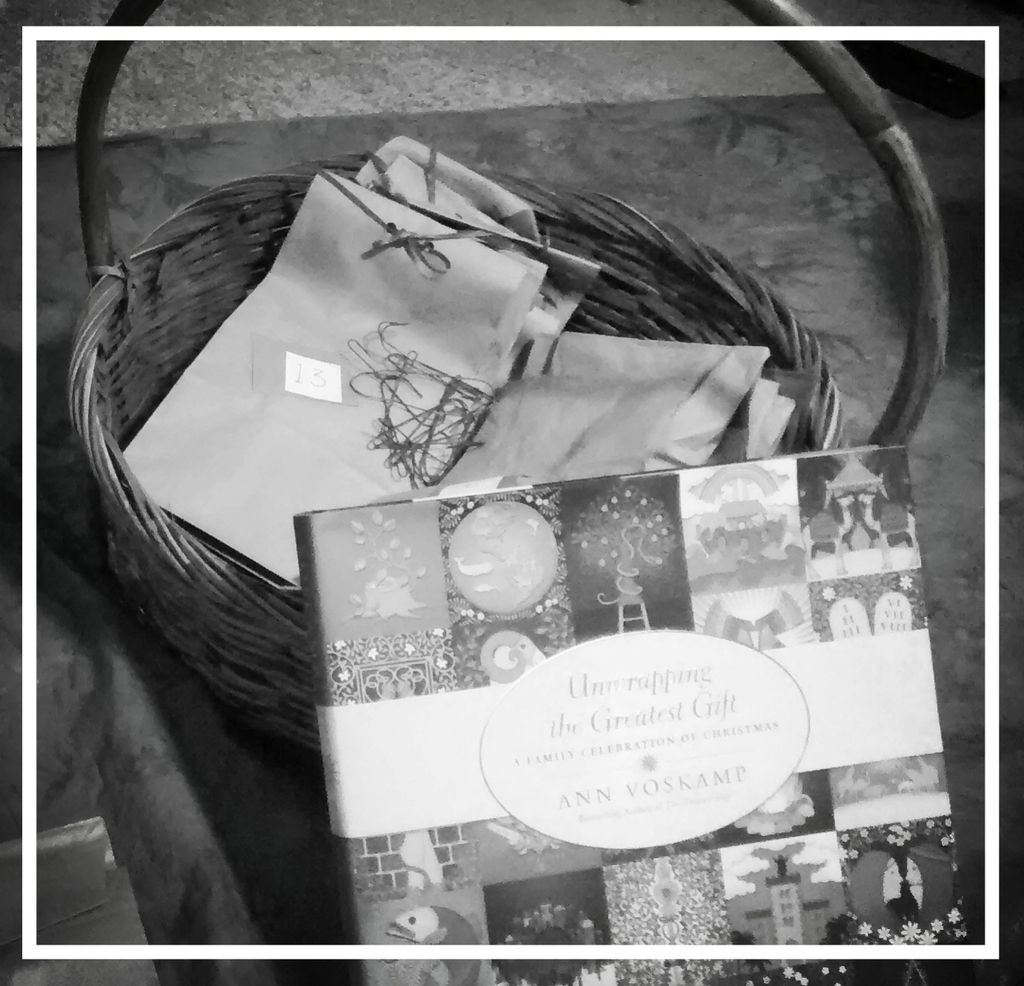
Of Anticipating Advent

The New Testament story of Simeon has long been a favorite of mine (for reasons documented here) and this Christmas season I have been blessed with the opportunity to share a devotion with a precious group of ladies whom I adore. So, of course, Simeon is on my mind and I've been working to flesh out his story and his words even more. What does it mean for Jesus to be "a light for revelation?"

As I have researched and cross-referenced, I have come across the words in Isaiah 40, which declare:
"Comfort, comfort my people, says your God.
2 Speak tenderly to Jerusalem,
    and cry to her
that her warfare[a] is ended,
    that her iniquity is pardoned,
that she has received from the Lord's hand
    double for all her sins.
3 A voice cries:[b]
“In the wilderness prepare the way of the Lord;
    make straight in the desert a highway for our God.
4 Every valley shall be lifted up,
    and every mountain and hill be made low;
the uneven ground shall become level,
    and the rough places a plain.
5 And the glory of the Lord shall be revealed,
    and all flesh shall see it together,
    for the mouth of the Lord has spoken.”"

And the glory of the Lord shall be revealed . . . made manifest, as my footnote indicates.

And Simeon, the Scripture says, is one of these who eagerly anticipated the comfort that had been declared, this glory of the Lord to be revealed.

It has often been stated that the 400 years represented by the gap between the Old Testament and the New are the "silent years" in which God did not speak to His people. Yet, as the angels appearing to Zechariah, Mary, and Joseph indicate, as the Holy Spirit speaking to Simeon that he would not die before he saw the promised One indicates, God was anything but silent during these times.

Just as He is anything but silent in our time.

We live in a time not unlike that of Simeon. His people had waited over 700 years since Isaiah spoke his prophecies declaring this Messiah - 400 years since any prophet had spoken ever. They watched their people be overthrown, tossed around by the kingdoms of this world and then come under Roman rule. Times were difficult. And these people who had been waiting and watching and praying, asked, "How much longer, Lord?!"

And here are we, 2000 years since that first fulfillment of prophecy, yet 1900 years from the last confirmed Word from God to all people. The canon was closed and God turned "silent." And the people watched. And they waited. And they prayed.

And we continue to watch. And wait. And pray. And cry out, "How much longer, Lord?!"

Yet, we do not wait without hope. We have this hope that is Christmas - this evidence of promises fulfilled. We do not know His timing, but we know He is faithful.

And that's what this season of Advent is truly about - feeling the weight of this anticipation. Of watching, and hoping, for this Savior of the world.


It's not simply finding a creative way of counting down 24 days, awaiting the presents, or the meal, or the cookies, or even the starlit wonder in the eyes of children, waking in the pre-dawn hours to unwrap what they have been anticipating.

It is a time of hope and anticipation, to truly grasp what the world felt as it waited from the dawn of time for a Savior of God's people, and for all people, everywhere, to emerge and mend what was broken. And as we live in a world that seems beyond repair, we must know what that was like. We must know this anticipation and hope. And we can see the day coming - the day that represents the birth of this Savior, this God made flesh Who came down, His glory made manifest for all people. And we can rejoice knowing, while we remain in the dark, we can unwrap this greatest gift we have been anticipating and understand, the dawn is yet to come. There is still a day coming.

But it will come. Let us wait with wonder.


28 October 2015

Of Leafing Through the Pages

About a week ago, I was waiting for the fourth-grade girls' Sunday School class, in which I have been assisting, to begin, when I received a text from the sweet friend who actually teaches these gils every week. She wasn't going to be able to make it. Could I teach?

Well, at least I'd remembered to bring the lesson plans with me - the ones I had not even looked over one iota before this very moment. Not to mention, I hadn't been in Sunday School for the past two weeks for various reasons. So, I had no idea what the girls HAD been learning, nor what they were scheduled to learn that morning.

Splendid.

As I fumbled my way through the beginning moments, I asked the two girls in attendance (thankful for a holiday weekend!) to catch me up a little while I leafed through Acts, the book we'd been studying, to fill in the gaps in the lessons they were sharing. I saw the story of Paul being blinded on the road to Damascus (a Sunday School staple), I was saddened that we had skipped over the conversion of Cornelius, the first Gentile convert (a personal obscure favorite of mine), I watched them draw out for me the illustration of Peter being freed from prison by an angel and then I was brought to this week's lesson - about Paul and Barnabus's encounter with a magician attmepting to deceive the people away from the gospel - one entirely too short to draw out into a full lesson, particularly without preparation. Great.

But, real quick, what was this heading? About the death of King Herod? So, I read that to the girls quickly. Why not? We had time to kill. And I emphasized to them that upon being called a god by those listening and he not giving the glory to the actual God in heaven, he was immediately eaten up by worms and died. Worms. Gross. This, of course, captured the girls' attention, so at least we had that benefit. And then we moved on to the actual lesson.

Fast forward one week. I'm no longer teaching (thankfully, because I forgot to even bring the lesson plan that day), but my dear friend is reading our next story from Acts - Paul and Barnabus fleeing from those who would have them dead, to a town where everyone declares them gods - Zeus and Hermes, no less. And these two men were very quick to deny those claims and refuse the gifts of admiration.

Right away I saw the contrast between these two stories: Herod who had accepted the praise and adoration and paid the consequences and Paul and Barnabus who pointed the glory back where it needed to be. And I felt there was a reason that obscure story of Herod being eaten by worms - a story our lesson plan overlooked for its seeming insignificance - was even nestled in the pages of our Bibles.

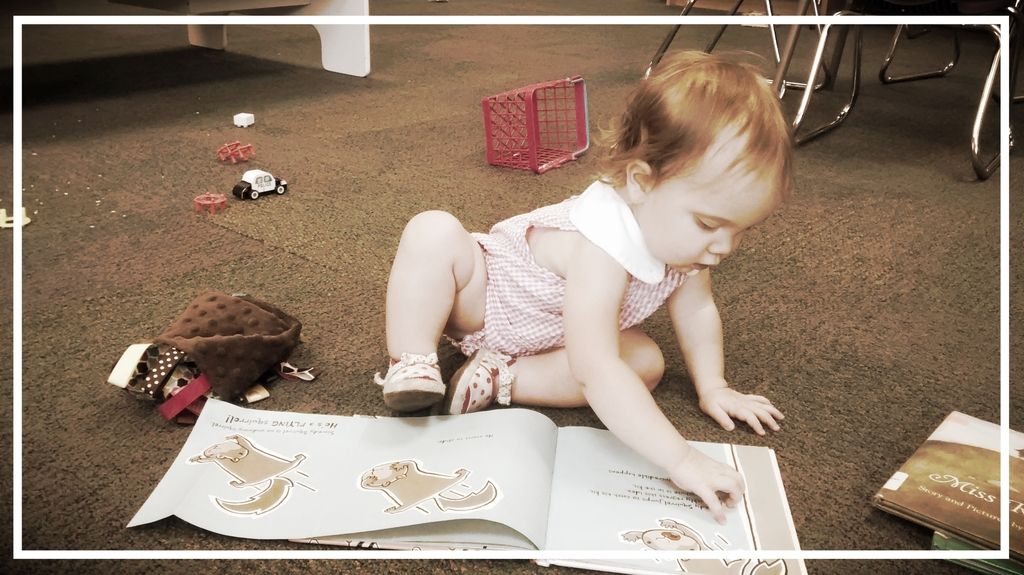
This brief moment underlined to me something I had been considering for awhile - the importance of spending quality time in the actual pages of a physical Bible - one that can be felt in your hands, where your fingers can turn the pages and your eyes can drift over the words, titles, themes of this one book, that creates a whole story, not just snippets or vignettes.

I was reminded of a movie I watched recently - one I found streaming on-line while I folded laundry or did some other task that I felt constituted a valid excuse to spend naptime in front of the television - that focused on two high school teachers - one of them an English teacher.

In one particular scene, he collects an assignment from his students - "three compelling paragraphs on the ant." Specifically, though, they had to "use an actual encyclopedia, not computers." After collecting the papers, he sets them aside on his desk, turns to his students and asks a series of questions, "Who can tell me who Baron Anson is? . . . Where's the town of Ansonia? . . . Who the [heck] is Christopher Anstey?!"

To each of these questions his students had an answer - from articles that would have shared a page with their subject, the ant, in the encyclopedia.

The teacher concludes his point: "You see, you use a computer, you click on a word ant, you get the data, fine. You pick up a book and leaf through the pages to find the ant, you’re gonna bump into a saint, an admiral, a poet, a town in Connecticut. You’re gonna learn something outside of the assignment just because of your own undeniable and most valuable curiosity. You’re gonna see a word and you’re gonna jump on it or it’s gonna jump on you, then you have it forever.”

Then you have it forever.


And this is precisely what happens when we use our fingers to turn the pages of a book - any book. Can you imagine, then, how powerful a concept it is to have the Holy Spirit alongside you as you turn the pages of a Bible - who can draw your eyes to the one story (even one of a king eaten by worms) He can bring back to your mind later, as you read something else, to make connections you might have otherwise missed, were you zeroed in on the target.

His Word never returns to us void, not even the ones that we didn't set out to read, or the ones "assigned." Getting sidetracked can be a blessing. And it can be missed in digital form - when three quick clicks take us to the exact book, chapter and verse we need. We read and we're done. And that Word will also not return void, but it's still only one piece of a whole. And its the difference between ambling through the woods having slow conversation with a friend and hopping on the highway for a quick jaunt from A to B - either way is time spent with your traveling companion, but one leaves a little more room for open honesty, to see where the path leads you, to be surprised and allow for detours.

Please don't misunderstand me. Technology is wonderful. At times, I have been too lazy to grab a Bible off the shelf, or too forgetful to have my physical copy at church with me, and I've been grateful for a Bible I can whip out of my pocket on a moment's notice to reference as needed - right there on the device I almost always have with me. And sometimes a direct route to a destination is necessary.

But don't overlook what you're missing if this is the only Bible you ever read. Don't miss the beauty of pulling His Word from the shelf and wandering through its magnificent pages.

This full, unabridged copy of God's Word is a most precious gift, take some time to unwrap it.

30 September 2015

Of Opening Our Eyes

A few months ago, through one of the series of rabbit trails my brain follows, I was inspired to research a phenomenon related to World War II of which I had not previously heard in detail: what was known as Kindertransport.

The idea was simple: Europe was falling to the Nazis daily and people from within could see that the future for the Jewish community under Nazi rule was bleak, so they endeavored to get them out of there. Great Britain agreed to accept them, but only the children. And, surprisingly, the Germans agreed to allow the children to leave, as well. Thus, over the course of nine months, thousands of Jewish children were funneled from Germany, Austria, Czechoslovakia, and Poland. Most came to Great Britain, but some also traveled to France, Belgium and the Netherlands, where they would also later need escape. Some were accepted into homes, but many did not want the added burden of more mouths to feed, so many more were sent to children's homes in the country.

Thousands of children. Sent by their parents to a future unknown. The vast majority never saw their parents again, or even their home country. Parents forced to make this choice - put their children on a train, promising a holiday in England, not knowing what the soldiers on the streets would do the next day and if they'd ever wipe those tiny noses again.

Babies. Babies left in the arms of teenagers to travel by train or boat to the arms of a stranger. Babies who might not even know they had a family to search for by the time this ordeal was over. Babies who might not even know they were the only survivors of a grand heritage of heroes.

It broke my heart.

That these families had to be torn apart because the only hope for survival was in the children - because no society in Europe wanted an influx of workers that would put their own population out of work.

From where we sit now, knowing the fate that awaited the Jews left behind in the countries where the parents and grandparents remained, we weep. We weep knowing these European nations could have done more. They could have opened their doors wider. They could have stretched their food further. They could have done something more to prevent millions. Millions. Millions of Jews from facing a fate we don't even want to fathom.

I'm sure it seemed comfortable here on this side of the ocean, watching poor Europe fall apart, glad it wasn't happening here.

Because America wasn't doing anything, either. A nation forged on the backs of refugees, explorers, those who saturated a continent with travelers from foreign lands. They didn't want to accept even the children. The handfuls accepted were done so begrudgingly, with very little government support or assistance.

If they had known. If they had known, would it have made a difference?

If those soldiers had seen the trucks piled with emaciated Jewish bodies, the mass graves, the gas houses, the work camps. If they had seen them earlier, would the nation, all the nations, have responded differently?

I wondered. And I wept.

Yet, here we are. At the culmination of what has been called the greatest refugee crisis since World War II. It is a watershed moment for us, as a nation, as a planet.

Have we learned our lesson?

Or should we continue to wait as these thousands upon thousands of individuals and families see something so horrific happening in their own country, their home, that they would risk their lives, traveling treacherously on a journey many won't even survive, taking almost nothing with them and then abandoning the miniscule amount of possessions they did carefully select, for the sake of survival. They can see it, what we refuse to see. They understand the risk is worth leaving behind what is happening.

And here we sit, on the other side of the ocean - or some even on the other side of a sea, or a border, or a fence - and we think, we're glad it's not happening here.

At least it's not me who has to decide which of my children will survive.

At least it's not me hearing the sound of my husband calling my name over the waves as he drowns.

At least it's not me living in an empty shipping container wondering what will happen next.

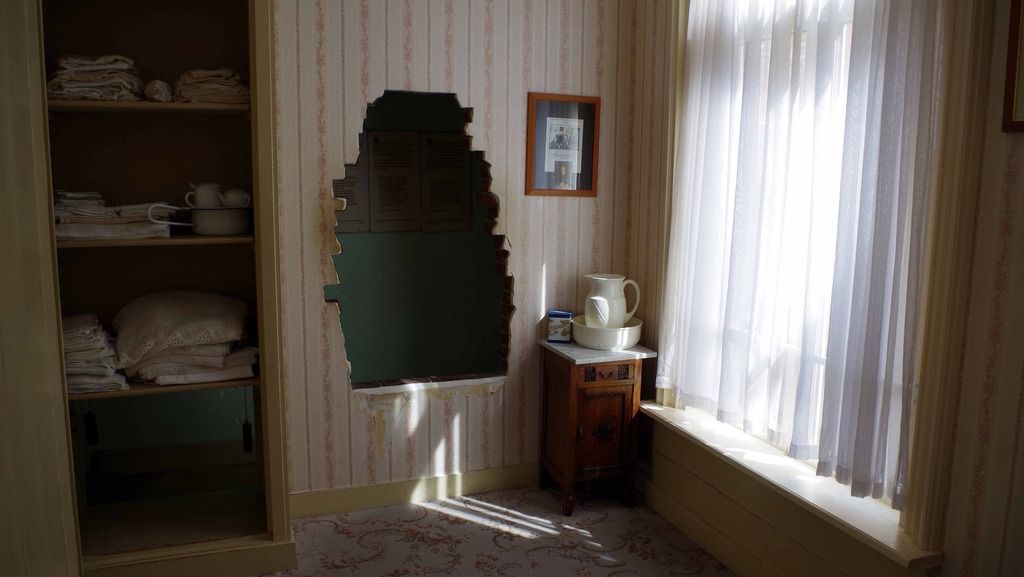
A month and a half ago, I was privileged to visit the home of Corrie Ten Boom, one of many heroes of the era in which these Jewish people needed protection from communities that had never before given their heritage a second thought. We saw the living room where she welcomed these people of God and the very hiding place where six were concealed and protected from a dire fate while she and her family were arrested. She was the only one of those arrested in her family to ever return to that home, that living room, that Hiding Place.


As I spoke of this experience with a friend who has seen decades more of this life than I have and has the wisdom to prove it, she mentioned in her soft voice, "It always makes me wonder what I would have done."

And as I considered the news with which I had been bombarded for months of a situation in Europe I would rather pretend isn't happening now, I spoke honestly, "I think I would have closed my ears to it." Because that is what I do now. That is what I do when this crazy life inside my own home swirls around in my head and I can't even think straight as far ahead as to what will be for dinner - to the point I put a box of Star Wars macaroni and cheese on the counter in front of my face, so the next thirty-seven times I stop myself to ask that question, I'll remember the answer. How on earth could this crazy, hectic brain ever even wrap itself around what is happening a world away? And I've told myself it's ok. It's okay to close my ears to protect my mind, my sanity, from going awry. For the sake of myself and my family, I need to shut it out.

I told my friend that day, "It's hard enough just to focus on living my life, let alone think about what others are having to endure." and then I paused, as I heard my own words, "Maybe," I continued, "that's the problem. I'm trying to live this life in the context of what's going on and I can't make that work. Corrie Ten Boom had to be willing to change the way she was living in order to make a difference."

Maybe rather than fitting this truth about the tragedies into the context of our lives and, after realizing the piece just doesn't fit neatly into any corner of our minds or hearts we can find, tossing it out as someone else's piece, someone else's problem, we need to come to the reality that perhaps our lives need to change to fit the context of what is happening a world away.

We can't keep living in ignorance and hoping the world will change. Hoping those escaping horrors we would rather not contemplate will find somewhere to land and someone to lend a hand, as long as it's not us.

It's time for us, as the church, as humanity, to say we won't let this happen again. Not on our watch. We won't watch millions die because we would rather close our eyes than see what's in front of us. Because we would rather seek entertainment, comfort and numbness than do what it takes to let the truth set in - to feel the blood on our hands as we have rejected those who cry out.

What will you choose? As we walk in Christ, let our answer always be that we will choose love. And a love that is not just in word or in speech, but in deed and in truth. Love with your actions, your very life. Love. And act.*


*For those unsure of where to start, please visit wewelcomerefugees.com or samaritanspurse.org/refugees-europe

24 September 2015

Of Faith, Hope, and Love

A friend texted me this week, mentioning how she lost her book, For the Love, the day before our much-anticipated book club (well, she’s a mother of three and care-taker of a fourth, so, let’s be honest, it was lost long before then). I offered to share, no worries, before she corrected herself:  it was the book What Love Is – our morning Bible Study book - that was lost. 

“Lol – there’s a lot of love going on!”

And it couldn’t be closer to the truth. You could definitely say, God is speaking to my heart about a lot of things lately – but the greatest of these is love.

After working since January to memorize my way through Colossians chapter 3, I was inspired to study the rest of the book – because when the chapter starts with, “If, then, you have been raised with Christ,” it leads one to wonder, well what brought us to this point? How did we start this discussion about being actually raised, brought to life, with Christ, or, more accurately, in Christ – where my life is now hidden, as the verses go on to say.

And so I duped my small group into studying it, too, so I would have more motivation to follow through. Because that’s what small groups are for. And you know it’s God’s will for this study to happen when one member of your small group says, “Actually, I wrote the study notes on Colossians for the Holman Christian Standard Study Bible when I was in seminary.” Because of course he did.

And then, I cracked open my study Bible, aforementioned study notes, and journal and spent an hour and a half on four and a half verses – two of which were Paul and Timothy introducing themselves, which you know is weird when the man who earned that doctorate in New Testament something-or-other, the one who literally wrote the notes on the subject asks, “An hour and a half? Really?” Yes, really.

But that wasn’t enough, apparently, because God has been confirming this lesson continually in the past week and a half, so because we cannot but speak of what we have seen and heard (Acts 4:20), I’m going to share this lesson with you – in a whirlwind of a blog post that will hopefully be much shorter than an hour and a half, so buckle up.

It all starts in Colossians 1, verses 4-5(a) – “since we heard of your faith in Christ Jesus and of the love that you have for all the saints, because of the hope laid up for you in heaven.”  I noticed, after reading these verses, in both sets of study notes I had in my possession, this sequence of attributes was a favorite topic of Paul – faith, hope, and love. Which sound pretty and look all spiritual on our walls, and may have been turned into fancy wire ornaments by, well, me. But I didn’t know this was a specific Pauline (see? I totally could have gone to seminary) theme. I needed to know more about this, because as another small group member stated, when someone in authority mentions something multiple times, it’s important to them (We have a lot of smarties in our small group).


So, I looked up every cross-reference listed* in the notes and made a three-part list, to see what, exactly, Paul had to say about faith, hope, and love and what they actually meant for him, other than a great theme for wall décor.


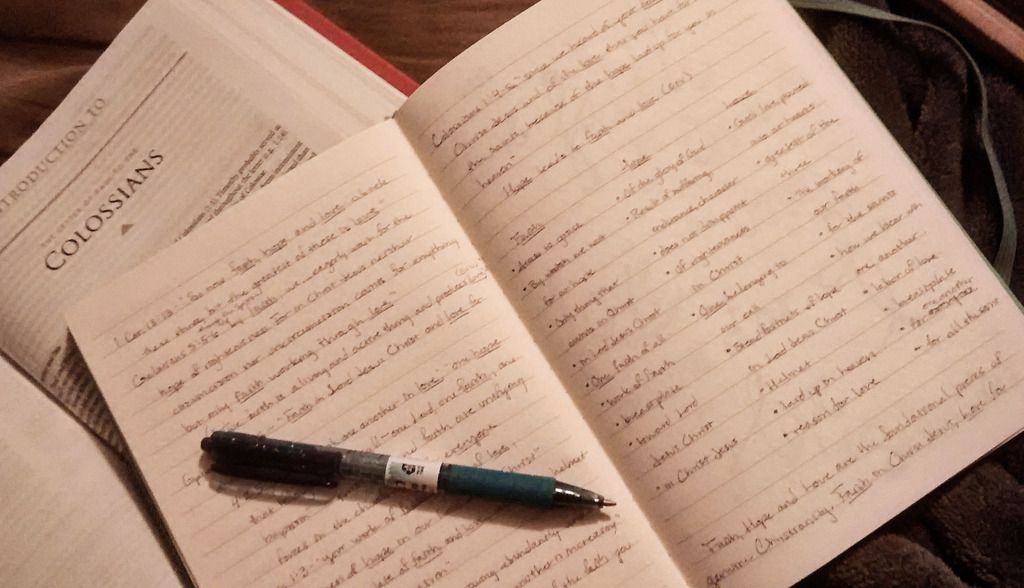
If you happen to have spare time, I highly recommend this activity, but if you don’t, I boiled it all down in my journal to this:

“Faith, Hope, and Love are the foundational pieces of genuine Christianity. Faith in Christ Jesus, Love for others (pouring/overflowing from the love poured into us by the Holy Spirit [Romans 5:5]), based on our one hope of salvation and righteousness awaiting us in Heaven.”

So, this love, that is a strand in this cord of Christianity, isn’t just a love for Jesus, which is wonderful and necessary, but a love for others – as 1 Corinthians 13 says, our faith and our acts of service are useless without it. And this love partners with our faith, based on the foundation of hope.

I wrote more (shocking, I know):

“What’s beautiful is, according to 1 Thessalonians 5:8, faith and love protect our hearts in spiritual warfare, while our hope protects the head. Hope is the knowledge we have of what’s coming. Faith and love are the emotional outpouring stemming from that knowledge.”

So, this knowledge, this hope is what protects our minds from the attacks of the Enemy, while our faith in Christ and resulting love for others protect our hearts.

I don’t know if this is exciting or interesting to anyone else, but it was surprisingly mind-blowing to me.

But, then, let’s go back to 1 Corinthians 13 – as I considered this in Bible Study the day after verbally vomiting all of the above on our small group, I was reminded of the final verse, “Now these three remain, faith, hope, and love – but the greatest of these is love.”

Well, but, really?

Our hope, our knowledge of salvation, and our faith in Christ, are inferior to love?! And, specifically, as Paul emphasizes multiple times, love for people? Not our love for Jesus?

As I pondered, the truth hit me, or, more accurately was whispered to my heart. Our love poured on others – that love that was once and continually poured into us by God through the Holy Spirit – is the outward demonstration of that inward faith and hope. That is how we show what we believe and what we know to a world that can’t see our hearts or our minds – and, more importantly, can’t see God. 

But they can see our love.

And it’s that love that will draw others into Him – as they gain their own hope for salvation and faith in Christ.

Love is the key to all of this – it’s the seed we plant for others.

And, let’s remember, as another beautiful friend pointed out, our outward demonstrations of love look different for each person. Remember The Five Love Languages? Those are important – so don’t think that just because you’re not good at showing self-less acts of service or maybe your words of encouragement aren't as eloquent as someone else's you have failed in this regard.

You show love to others the way God designed you to do, so long as it comes from a heart of faith and mind firm its knowledge of salvation.

And, so long as it’s a pure love reflecting the love of Christ – the kind of love that lays down its life for another – which doesn’t always mean stopping a bullet for someone else, but it may mean sacrificing your “me” time (not always, but when necessary, yes), sacrificing your possessions, your money, your self-righteous need to speak out in defense, your culture-driven need for perfection. Sometimes it means not having a clean house because a child needs some personal attention. Not getting the sleep you so carefully planned out because a friend needs someone to talk to. Not living in comfort so that someone else can just live.

This kind of love – the love that so perfectly reflects the love of a Father Who sent His Son into a dirty, dying world so that this loved Son could be the replacement for these dirty, dying people in their death. This kind of sacrificial, self-dying love isn’t just what draws the world to Him, it’s the pure evidence of Christ in us.

It is not optional.

As that author of WhatLove Is so beautifully put it, while discussing 1 John 3:23, “We can’t separate loving others from our belief in Jesus. Both are intertwined. Our confession of Him will lead to action, and true love in action will result from our knowing Him. Belief without love can make you a Pharisee. Love without belief can make you a humanitarian. But if you have both, you’re a child of God” (Kelly Minter, p 103).


I couldn’t have said it better.


*For your own study, these are the cross-references I looked into:
Romans 5:1-5; 1 Corinthians 13:13; Galatians 5:5-6; Ephesians 1:15, 4:2-5; 1 Thessalonians 1:3, 5:8; 2 Thessalonians 1:3, Philemon 5 

03 September 2015

Of Being Fully Known

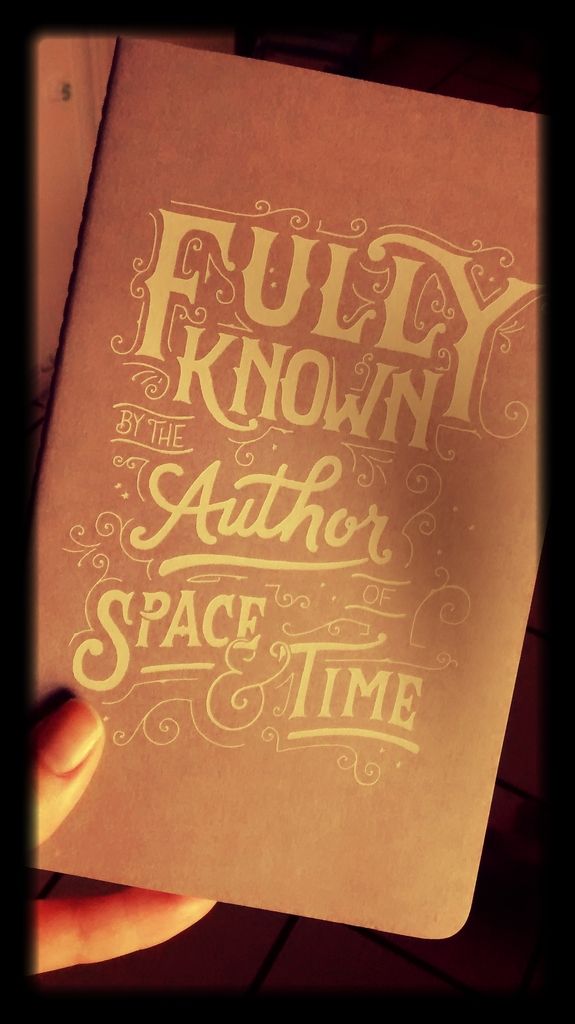
Recently, a favorite artist of mine, JJ Heller, released a new album. And along with it, journals highlighting lyrics from said album. Without having listened to any of these new tunes yet, I chose based on what these words spoke to me. And this is the cover I opted to receive:


"Fully known by the Author of space and time."

It was a few days later, after receiving the package in the mail (half the fun of on-line shopping, am I right?!) and putting that CD on repeat in my kitchen (yes, I still listen to CD's as my primary form of musical consumption - which is why most of what plays in my kitchen is 90's/00's Christian pop/worship/hip hop - you know, whatever I managed to find under the "Christian" tab in the Wal-Mart CD aisle), and hearing that song multiple times that I finally realized why the words meant so much to me.

I have always had a fascination with filling out surveys. Questionnaires, worksheets, forms.

I like paperwork. I know, that makes me a freak, but if you give me a blank line to fill out, I get a little giddy. And if you're asking for information about me? Well, watch out.

I mean this. Really. You know those hour-long meaningless email forwards that used to make the rounds (back in the days before Facebook almost obliterated email)? "What's your favorite color?" "What time is it now?" "Ice Cream or Popcorn?" "If you owned a purple elephant in Madagascar, what would you name him and what color would his tusks be?"

Yeah, those ones.

I did every. single. one.

Because I loved it. As an introvert with an extrovert side she tries to hide because she thinks others just aren't interested, the opportunity to reveal parts of myself that I find fun, quirky and interesting, while not overtly boring others (hey, it's their choice to read through the answers) is a win.

Notice: I have my own blog.

I haven't changed.

I still like the idea of telling others about me while not forcing myself. If I'm speaking to you, you feel compelled to listen, and worse, yet, I might be able to tell if you wished I would just shut my mouth or are put off by what I've said or who I am (because I've seen the look a time or two). If my written word bores you, you can look away and I wouldn't even know. Which is good, because you may have already done so.

And underneath all of this, this eagerness to share myself quietly, and with many (many) words, to others, is a desire to be known. To reveal who I am, what I've done and things I enjoy, in the hopes that others will accept me and think I'm someone worth knowing.

Yet, here is this God.

The One, True God.

Creator of all the universe.

The Author of space and time.

The One Who formed me in my mother's womb.

And He knows me.

I am fully known. I didn't need to fill out a survey or tap into my witty side (that I like to pretend is there). I don't need to forward the answers to 20 people or send Him a link to the words I've spent the last hour typing.

He knows me.

And still loves me.

Because it's not just the cute, quirky stuff. The odd talents and fun facts, fascinating experiences or interesting tastes. He knows the ugly. The stuff I paint over and try to hide with my bubbly banter. He knows the depths.

Fully known.

And He still loves me.

And if I have this, this love from the One who formed me, Who has seen my ugly. Who has not just seen the ugly, but has picked me up, brushed off the dirt, washed it in the blood of His own Son, and declared me beautiful - if I have this love. From the one who knows me fully and chooses me anyway - why am I still seeking the approval of anyone else?

Whose opinion on this wide, roaming world, filled with sinners - liars, cheats, gossips, back-stabbers - sinners, like me, could possibly matter anymore than the one who has already declared me worth knowing?

Thus, I choose to live loved, in full recognition that I already have the love and acceptance - all I could ever ask for - from the One who knows me inside and out - deeper than any being on this earth.

It's this love that has freed me, to be the real me, uhidden and unpainted. Just me. Loved and accepted.

By the Author of space and time.


31 August 2015

Of Deadly Australia


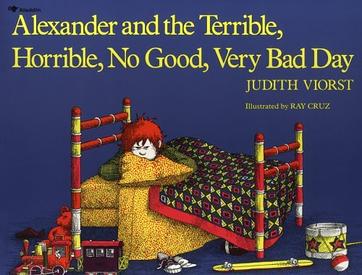
A few nights ago, after our own terrible, horrible, no good, very bad day, we decided to read about Alexander as we tucked into bedtime, because we all know, it doesn't get worse than that for a white, middle class American child (I mean, waking up with gum in your hair? Tragic.). As I read the last line, my daughter surprised me with her response:

Me: "Mom says some days are like that. Even in Australia."
Micaiah: [confused, like someone just said the most ridiculous thing she's ever heard] "But how can there be days like that in Australia? There are no people in Australia, or they'd die!"

I giggled to myself. My indoctrination was working.


A number of years ago, while I was in the throes of lonely middle school years, my family tossed around the idea of a move to the land down under. My dad had been given a rare career opportunity that would take us all to Australia to live for two full years.

Already a traveller at heart, I was elated! Two years in Australia?! We'd get a koala for a pet and go snorkeling in the Great Barrier Reef on weekends (hey, let a sixth-grader dream, ok?). And the only thing standing in the way was our answer - yes or no?

Uh, yes! Duh, yes. (said the sixth-grader in me)

But then there was my sister - who was not in the lonely middle school years, but in the thriving high school years - the ones with friends, with prom, with basketball games and graduation. She would be giving up the two final years of those moments for this adventure. And she was not having it. To be fair, I don't actually recall her declaring this in any sort of diva-like tantrum. It was more of an understanding my parents had of where she was in life and what she needed.

Blah. Blah. Blah.

All I heard were my dreams for our pet koala being flushed down the high school toilet. High school was lame, friends were over-rated and being stuck in land-locked Missouri was not worth any of it.

But, now, as I look back with fresh eyes, I am grateful. And I'm not going into some sappy, "if we'd gone my life would have been different" direction - but rather, "if we'd gone, I might not have survived." Because in the years since, I have discovered something:

Everything in Australia wants to kill you.

It's true. In fact, after much research (or sitting on the couch as facts swarm at us from internet and television), my husband and I have come to this very real conclusion. Because every time you find a list of the "top deadliest," "most poisonous," and "scariest" it's Australian native creatures and plant-life that top the list.

Like spiders who don't just attack because they're scared - but will HUNT YOU DOWN*. Plants that induce such pain that those who touch it opt for suicide rather than endure the torturous agony. Snakes (and not the innocent, cute kind - because I don't mind those) that slither right into homes.

I mean, seriously, death around every corner.

Thus, as a responsible parent, I have passed this information along to our children. We've watched YouTube videos of deadly plants, and I was sure to point out where the majority of those came from. My kids know it well: Australia = Death. And I had no idea how well I had passed along this message until that night, as we read about poor Alexander and his hated railroad train pajamas.

And, suddenly, through my daughter's brain-washed eyes, that innocent children's book took on a much darker turn. I mean, just how bad is it when your marble washes down the drain, that you would turn to Australia as your hope and dream. And thus, it has become clear to my children, poor Alexander has turned suicidal in the face of his dessert-less lunch and white shoes with white stripes. He clearly has nothing left for which to live.

Imagine there shock, therefore, when I re-assured them, "There are actually people who live in Australia . . ."

Maybe I need to re-consider my educational strategies . . .


*Please note: these facts about Australia are true. I did not look them up or bother with cross-references. Because I've heard them. On the internet, no less. So, absolutely true. Beyond a shadow of a doubt. . . . But don't quote me on that.

**I've also heard there are pretty things and neat people. But I'm sure that's just a conspiracy contrived from the Australia Board of Tourism, who realizes it might otherwise be difficult to lure people to a former penal colony. See - once upon a time, they understood and they sent people, DANGEROUS people, there to DIE. Pure fact.